Commercial asbestos roof removal and replacement
An asbestos cement roof that has cracked, started to leak or reached the end of its life leaves you with a decision to make. That decision has to be made around a building that is still in use. We manage commercial asbestos roof removal and replacement for warehouses, factories and industrial units, from survey through to the new roof. If overcladding would suit your roof better, we will tell you.
When removal is the right route for a commercial roof
Most commercial asbestos roofs reach the point of decision because of something specific, such as sheets that have cracked or broken, leaks that keep returning, an asbestos survey or insurer flag, failing purlins, or a sale or redevelopment with a fixed date. Any of these is a fair reason to look at your options, although none of them means removal is the only one.
Asbestos cement sheets that are intact can stay where they are under a managed arrangement, and that remains a valid choice while nothing disturbs them. Removal becomes the better route when the sheets are badly damaged, the frame beneath them is failing, or the building is due to be redeveloped. Disturbed asbestos releases fibres that can be inhaled, and damaged sheets are harder to manage safely.
What the work involves, from survey to new roof
- Survey and testing. We inspect the whole roof in person and arrange asbestos testing where the material needs confirming. That establishes what the roof is made of and what condition it is in before anything is priced.
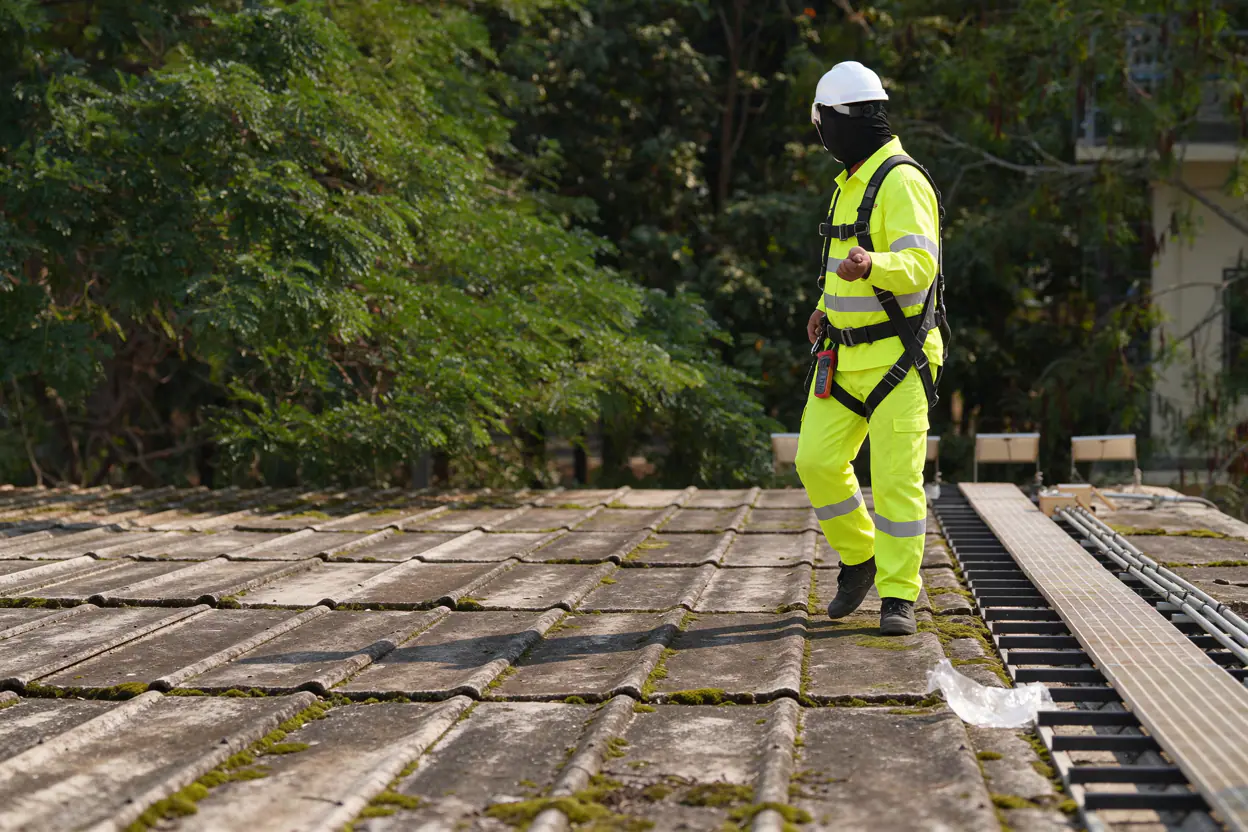
- Planning and access. The access routes and working areas are agreed around your building, and safety netting and fall protection are put in place before anyone works on the sheets.
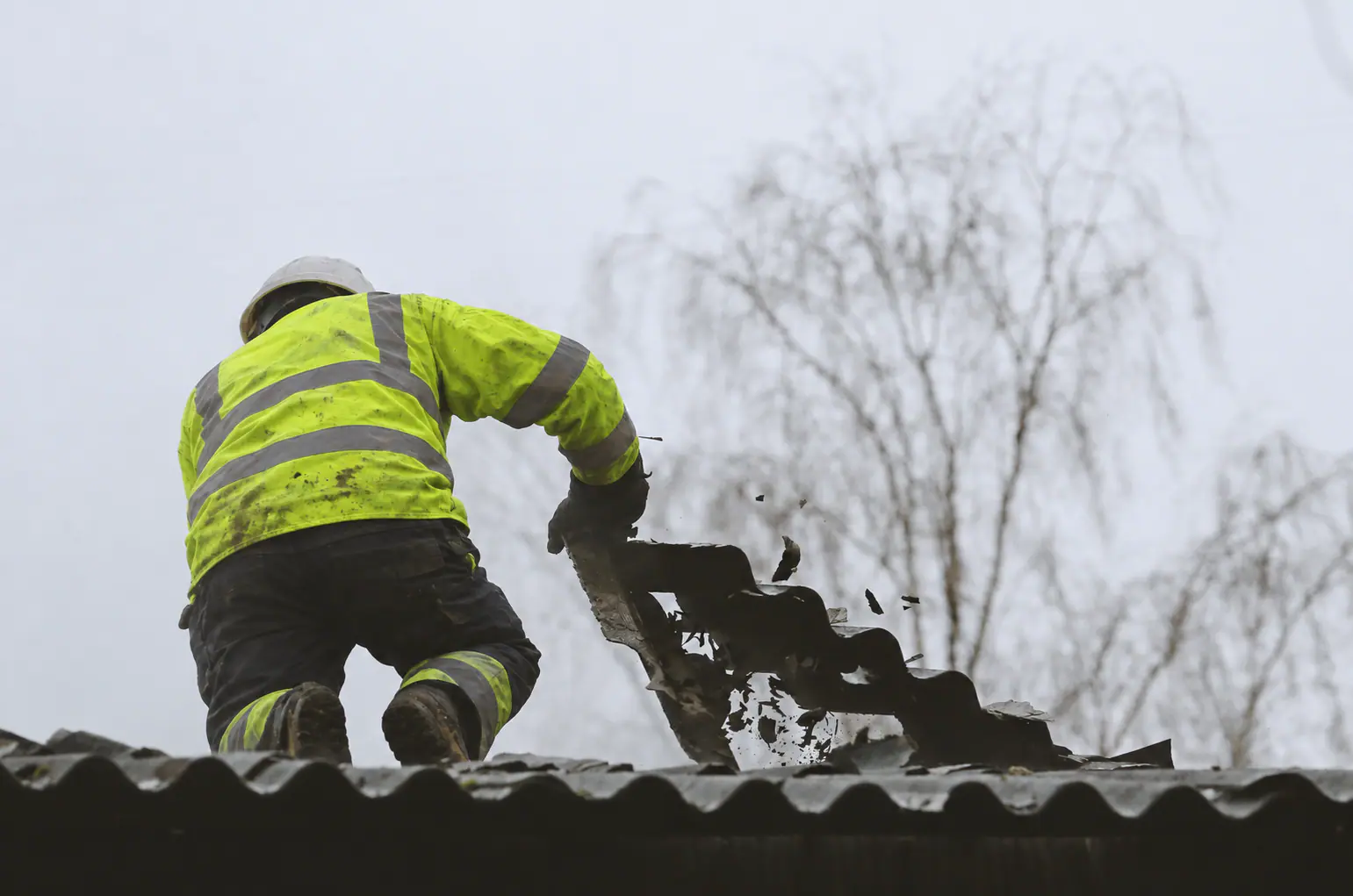
- Removal. The sheets are taken off under the controls that the Control of Asbestos Regulations 2012 and HSE guidance require for asbestos cement.
- Disposal. The sheeting leaves the site as hazardous waste and goes to a licensed disposal facility, with the paperwork that the law requires.
- The new roof. Once the old sheeting is clear, the new roof goes on, using the systems we install across commercial and industrial buildings, including metal roofing, single ply membranes and felt.
- Handover. You receive the finished roof and the paperwork for the job.
Licensed and non-licensed asbestos work
HSE divides asbestos work into licensed and non-licensed work. Licensed work covers higher-risk materials such as asbestos insulation, coatings and insulating board, and it must be done by a contractor holding an HSE licence.
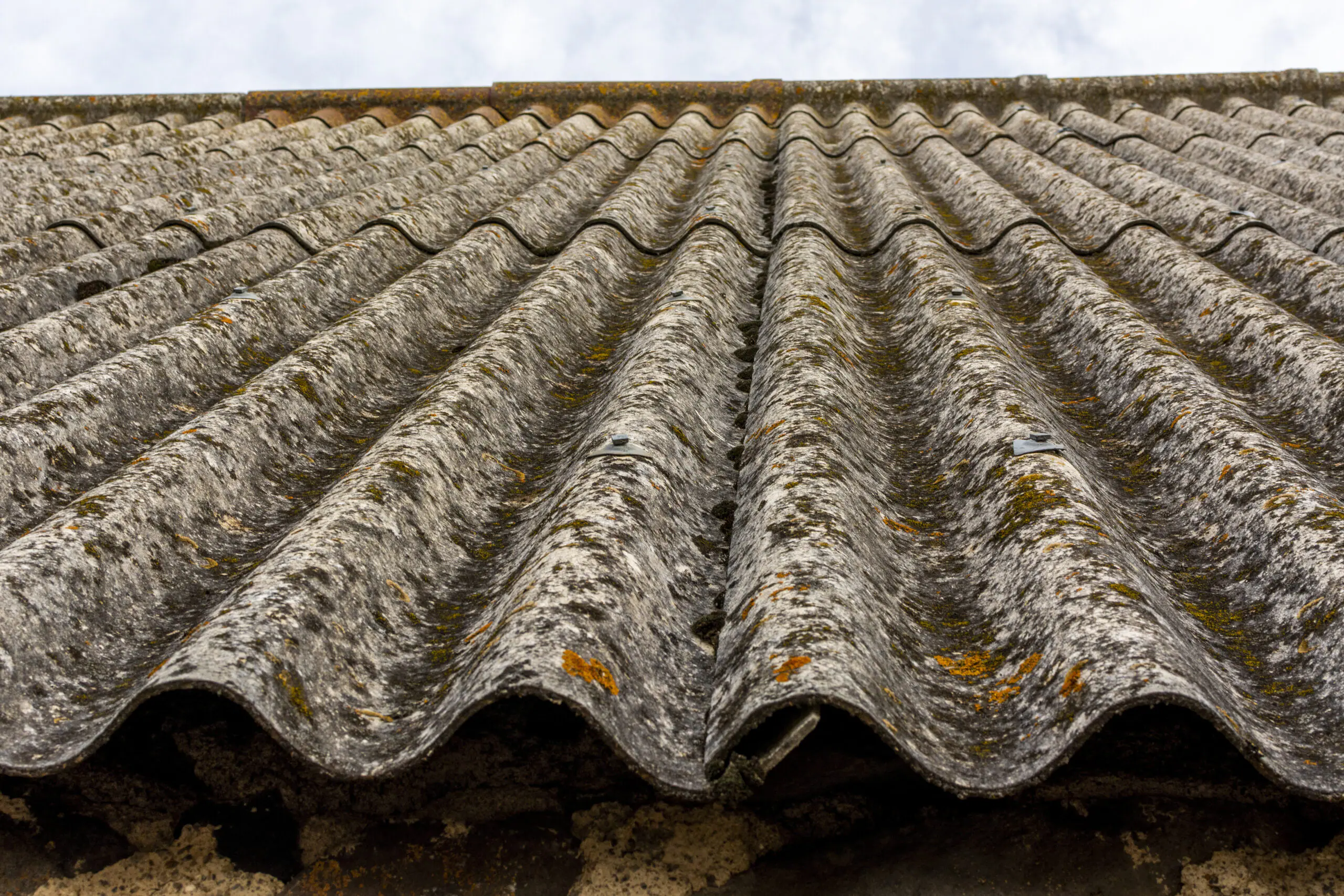
Asbestos cement roof sheeting is generally non-licensed work, but it is still regulated. The people doing it must be trained, and the controls in the Control of Asbestos Regulations 2012 apply, and some non-licensed work also has to be notified to the enforcing authority, depending on the material and the exposure involved. A roof that contains licensable materials as well will need a licensed contractor for those parts, which is another reason the survey establishes exactly what the roof is made of.
Whoever you appoint should be able to tell you which category your job falls into and how they will meet it. It is reasonable to ask for that in writing before work starts.
Removal or overcladding: choosing the right route
Removal and asbestos overcladding answer the same problem in different ways, and the right one depends on what the survey finds. Overcladding leaves the existing sheets sealed in place beneath a new insulated roof.
That suits stable sheets on a frame that can carry the extra weight, whereas removal suits sheets that are badly damaged, a frame that is failing or a building due for redevelopment.
Not sure which is best for your project? At the survey, we will tell you which route we would choose for your roof and why.
Keeping your building in use
Most commercial buildings can stay in use while a roof is replaced, but the work has to be planned around the people and processes beneath it. Access routes, working areas and netting positions are agreed with you before work starts, so that operations below can continue as far as the safety controls allow.
We will not promise that there will be no disruption. The stages that involve the sheets themselves can limit the use of the space directly below, and we agree what that means for your building before the work starts.
Waste, disposal and paperwork
Removed asbestos sheeting is hazardous waste, so it has to be carried by a registered waste carrier and taken to a licensed disposal facility, with consignment paperwork travelling with it. You should be given copies of that paperwork. Any contractor you consider should also be willing to tell you who will carry the waste and where it is going before you appoint them.
Asking at quotation stage is the simplest way to separate a contractor with a clear disposal route from one without.
How much is asbestos roof removal?
The price of commercial asbestos roof removal depends on the area of the roof, the type and condition of the sheeting, how easily the roof and the space beneath it can be reached, how the waste has to be handled and the replacement roof you choose. That is why we price after the survey and not before it. We do not publish a price per square metre, because a figure that suits one roof would mislead on another.
When you compare quotes, check that each one allows for safety netting and fall protection, for carrying and disposing of the waste and for the new roof. A quote that looks cheaper may simply leave one of them out. Our fixed quote sets out the full scope of work, the system and the price before you commit.
Safety and accreditations
Our accreditations include Constructionline, CHAS, SafeContractor, Achilles, Assured Altius, the British Safety Council, the Guild of Master Craftsmen and NWRTG. Your procurement team can check our standing with the schemes themselves before we visit. Whoever you appoint, ask for their accreditation details and verify them with the scheme and not from a logo on a website.
Asbestos removal and replacement project on a live site
On a tenanted office building, we removed 1,200 m² of ageing asbestos roof covering, disposed of it safely and installed a new twin-skin insulated roof while the site stayed live. The project write-up sits in our overcladding guide.
Book your free asbestos roof survey
A survey tells you whether your roof suits removal or overcladding, what the structure can carry and what a fixed quote will cover. Every project starts with a survey, and our commercial roof survey inspects the whole roof in person.