Electronic Leak Detection
NWIR carry out electronic leak detection surveys on commercial and industrial roofs across the UK. Every survey produces a written report with all defect locations marked on site and plotted on a CAD drawing, giving you documented evidence you can use to inform repairs.
How does electronic leak detection work?
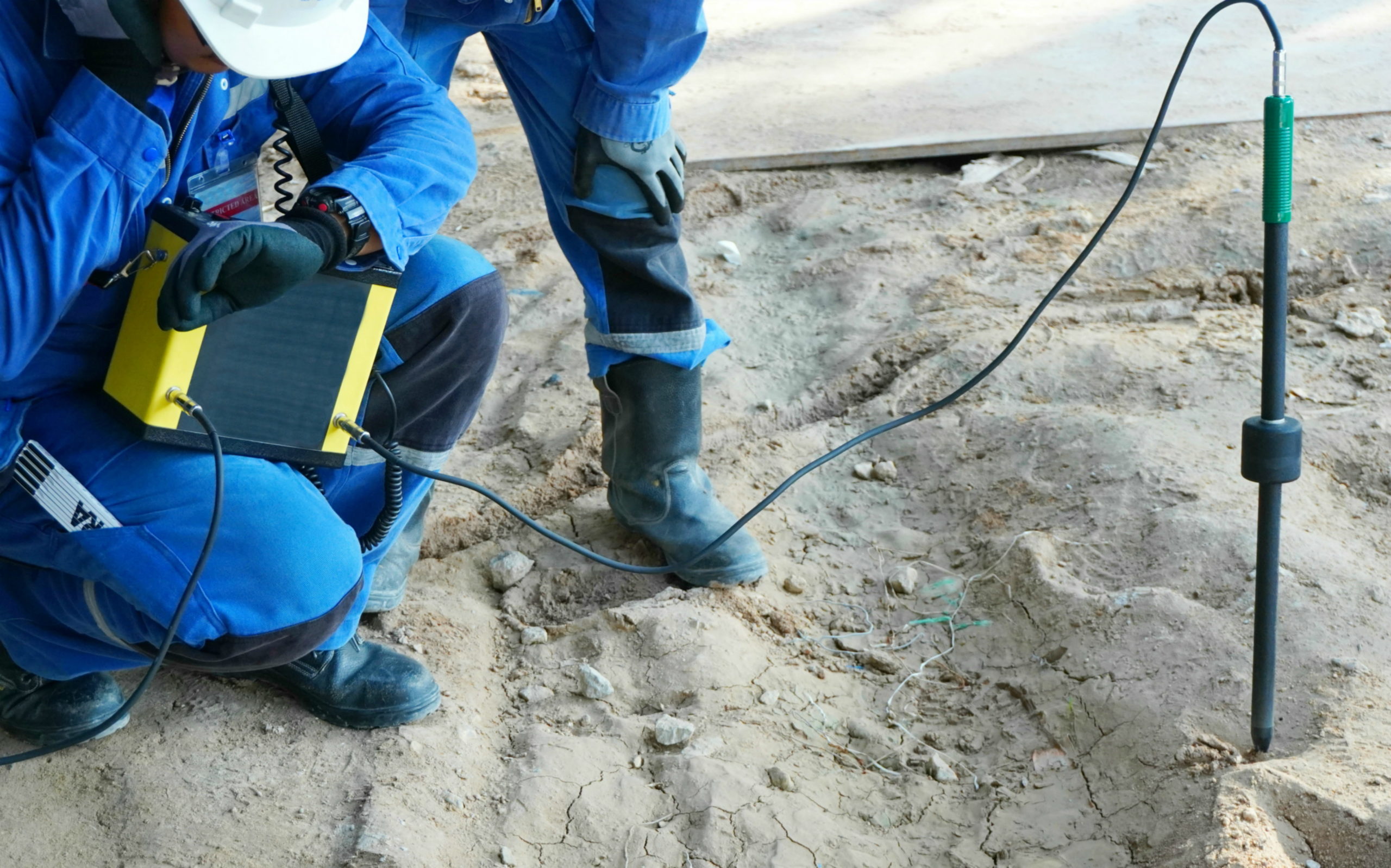
Electronic leak detection works by identifying the electrical difference between an intact waterproof membrane and one with a breach in it. A low-voltage current is applied to the surface of the roof. The result is that an intact membrane acts as an electrical insulator, keeping the current on the surface, while a breach creates a conductive path through the membrane, which is found by the testing equipment.
Which Electronic Leak Detection Method is Right For You?
-
ELD is carried out in one of two ways, either a dry test or a wet test. The most appropriate one will depend on the condition of the roof at the time of the survey and the type of membrane in place. Your NWIR surveyor will confirm the right approach before carrying out a survey.
Dry test ELD
The dry test is the most common method for flat industrial roofing systems. It works using a low voltage electrical current that’s passed across the surface of the membrane with a brush or roller. The current stays on the surface where the membrane is intact and, where there’s a breach, the current passes through to find the exact location.
Using the dry method requires the membrane’s surface to be completely dry during the survey. Because it keeps disruption to a minimum it’s often preferred for occupied buildings or for roofs that may already be compromised (because it doesn’t add additional moisture to the roof for testing).
Wet test ELD
The wet test is used if there’s already water on the surface of the roof. A controlled electrical current is passed through any standing water, with a breach in the membrane completing the circuit, and identifying exactly where the defect is.
Because you don’t need the roof to be completely dry, a west test ELD can be useful when you need a report quickly, like after you’ve experienced a leak.
Which membrane types are compatible with ELD?
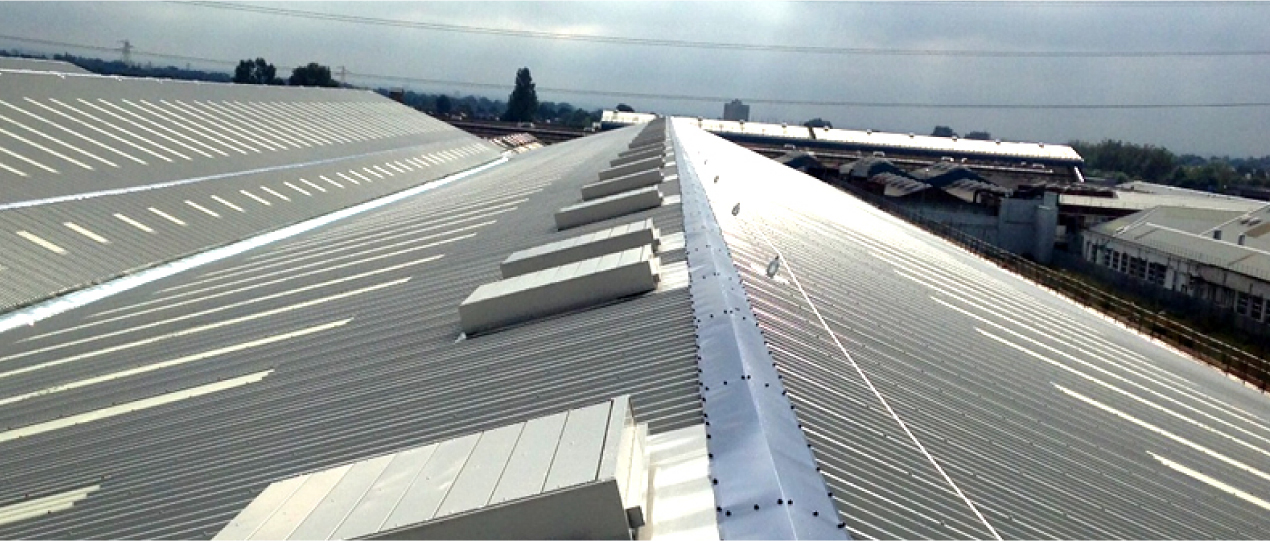
ELD is suitable for most of the common industrial and commercial roof membrane types, including:
- Single ply PVC
- Single ply TPO/ FPO
- Bitumen felt (both torch-on and cold applied)
- Liquid applied membranes
- Hot melt systems
- Mastic asphalt
ELD isn’t suitable for EPDM membranes. If you’re not sure if your roof’s membrane type is suitable for ELD, get in touch before booking and we’ll confirm with you.
Why ELD is a reliable method for finding leaks on industrial and commercial roofs
- Exact defect locations: ELD finds the precise point of membrane failure so it can be marked for repairs.
- Non-destructive: ELD survey equipment doesn’t penetrate your roof’s membrane so there’s no risk of further damage.
- Avoids flood testing: You don’t need to add water to your roof to do electronic leak detection so it’s ideal for occupied buildings or where you could risk compromising the structure even more.
- Works in wet and dry conditions: The different types of leak detection mean it’s a highly adaptable survey type that can be done at any time, in any condition.
- Documented output: Your written report and CAD drawings give you clear evidence and locations of defects that you can use to target repairs without more investigations.

How NWIR Carry Out Electronic Leak Detection Surveys
Every ELD survey NWIR carries out follows the same process.
- Initial enquiry and method confirmation
When you first get in touch we’ll confirm the type of membrane on your roof and the condition it’s in. We can then advise if ELD is the right option and which test method is the most suitable. If we don’t think ELD is right then we’ll advise you on the best course of action.
- Site visit and survey
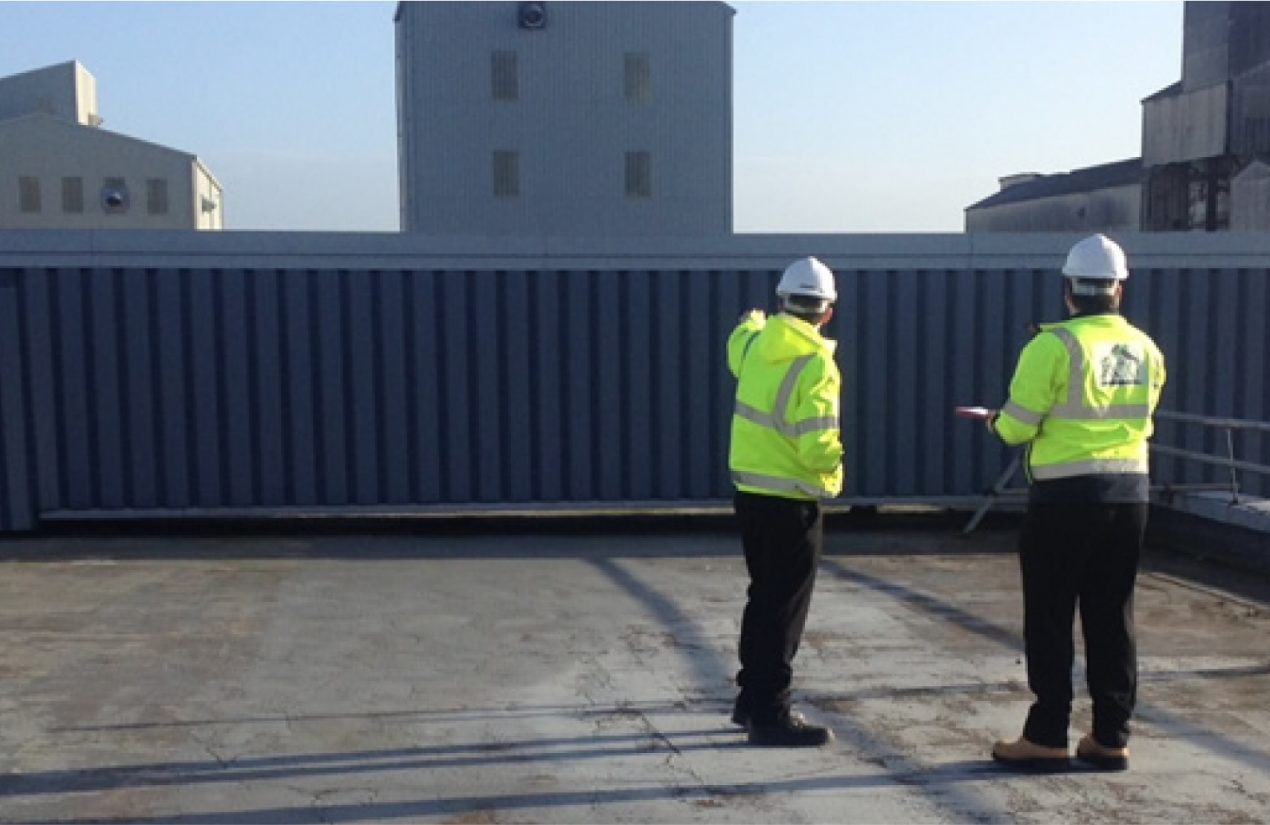
Our surveyor attends your site and carries out the ELD survey across the entire membrane area. Any defects are clearly marked directly on the roof surface so there’s no confusion about where repairs need to take place.
- Survey report
You’ll get a written report within 48-72 hours of the survey, which includes a condition summary, defect locations plotted on a CAD drawing of your roof and photographic documentation of our findings.
- Next steps
You can use your survey to instruct targeted repairs in areas we’ve found defects. If our survey has found more significant deterioration over a large area, or that your roof system is approaching its end of life, we’ll advise on a refurbishment or re-roofing specification.
When is electronic leak detection a good option?
Electronic leak detection is most effective on roof membranes that are still structurally sound but have developed localised breaches.
If the membrane is brittle, extensively degraded or there is widespread failure across the system, electronic leak detection will identify every defect and their exact location.
- Active or recurring leak with no obvious source: If leaks are returning after repairs have been carried out, or you can’t find where water is getting in, ELD can find the exact source.
- Water ingress following extreme weather: Post-event surveys uncover whether a membrane has been damaged and where.
- Pre-refurbishment condition assessment: If you’re considering a roof refurbishment an electronic leak detection survey can confirm if targeted repairs are suitable or if you need to consider a full replacement.
Post installation integrity check: Using ELD can confirm the integrity of a newly installed waterproof membrane before the area becomes inaccessible, for example before a green roof build-up or ballast layer is installed.
Frequently Asked Questions
When to book a roof moisture scan
Most clients come to us at one of four points, when the cost of guessing what is wrong with the roof starts to outweigh the cost of finding out.
- A leak keeps coming back after repair. The scan shows how far the water has travelled, so the next repair deals with all of the wet area rather than just the visible one.
- Your roof is due for refurbishment. Knowing which areas are wet tells you whether parts of the existing roof can stay in place or need to be stripped.
- You are setting maintenance budgets. Evidence of the roof’s condition lets you plan spending instead of reacting to the next leak.
- You are buying, selling or leasing a building. A scan gives you the roof’s real condition before you agree on a price or sign a lease.
From scan to targeted repair
Because we are both a roof surveying company and a roofing contractor, the quote that follows your survey is a full project costing, including the access and health and safety requirements of the job. When only part of your roof is wet, the work can be limited to those areas through flat roofing repairs rather than a full replacement.
Materials are installed by manufacturer-approved operatives, and new roofing can carry a single point guarantee of between 10 and 25 years, depending on the project.
Accredited roof surveyors and contractors
We are members of the National Federation of Roofing Contractors (NFRC) and accredited under CHAS and Constructionline. You can see the full list on our awards and accreditations page.
Other roof surveys and diagnostics
A moisture scan tells you where your roof is wet, but it is not always the best tool for finding where water gets in. Electronic leak detection locates leaks in most types of waterproofing membrane, while a commercial roof survey assesses the overall condition of your roof. You can see every method we offer on our roof surveys and diagnostics page.
Book a free roof survey
If you suspect water is trapped in your roof, finding out how far it has spread is the first step towards fixing only what needs fixing. Book your free site survey, and we will recommend the right scan for your building.
Call us on 0800 046 1500, Monday to Friday, 9am to 5pm.